
That one time I needed help identifying a bug
Originally posted 25/02/2024
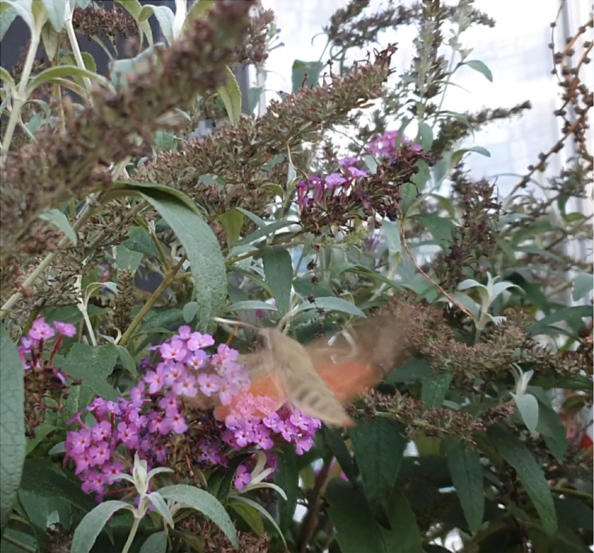
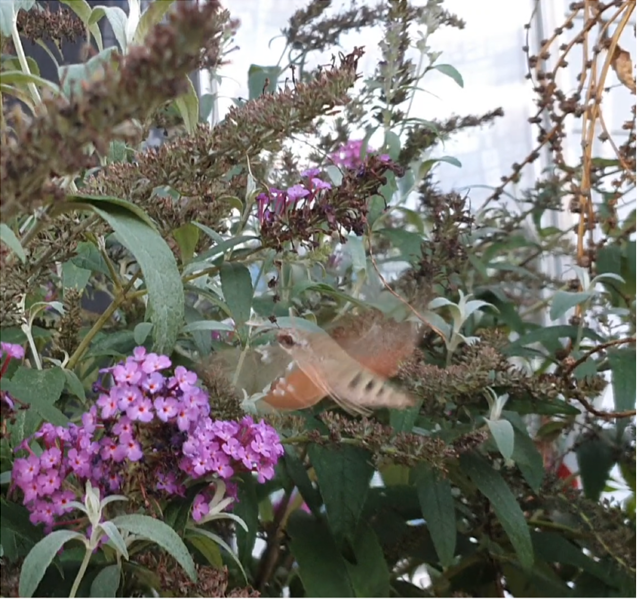
These are screenshots from a video my mum took yesterday, of this moth that I’ve been unable to identify. It was a pretty big moth in my opinion, as I’d never seen a moth that big before lmao. It was flying like how hummingbirds fly, which is why you can’t really see the wings properly. The body is a light brown, the top wings are the same light brown, with a small white spot on each of them, and the underwings are orange. It’s butt has bands of darker brown on it, and it clearly has long antenna.
For context: I live in northern NSW Australia, however I have previously seen and been able to correctly identify a different moth species that looked somewhat similar to this one, which was a North American moth called the Snowberry Clearwing, which also appeared on the same exact bush today, after having seen this mystery moth a day before. I’m not sure if this moth could be a North American moth or an Australian moth, but the unidentified moth in these pictures is a bit larger than the Snowberry Clearwing.
mysticmothworld responded, saying:
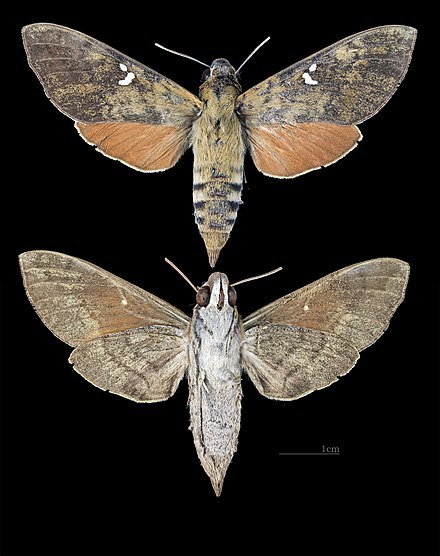
Hey so I suspect this moth is Nephele subvaria, which as you can see in the photo below (the photo is of a female btw, they have slight sexual dimorphism) has large wings and the white spots and stripes on its body that you spoke about. According to wikipedia it doesn’t occur in NSW but according to an australian site it does so…
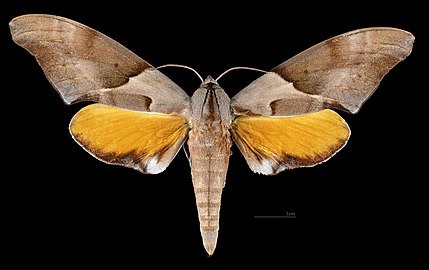
or it could be Coequosa australasiae, which looks like this:
Another thing I want to say is that you likely didn’t see a snowberry clearwing, because to my knowledge they haven’t been recorded in Australia. It was probably a gardenia bee hawkmoth (cephonodes kingii), which looks similar.
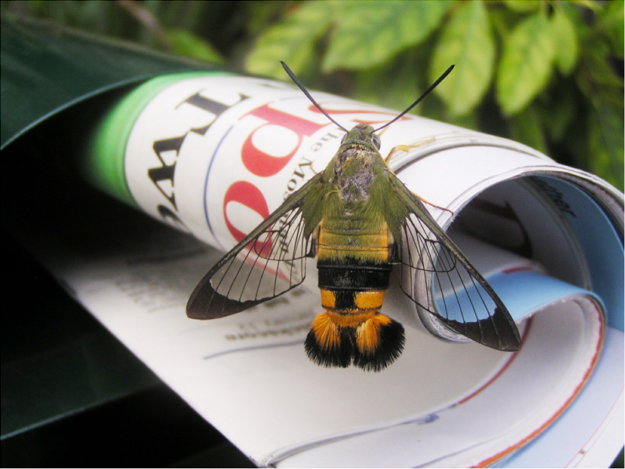
These are all members of the family Sphingidae, some of which, like the hummingbird hawkmoth and gardenia bee hawkmoth, had a bit of a convergent evolution moment and therefore fly in a similar way to hummingbirds.
For identification of local species I dont recommend google as it tends to be biased towards America and Europe, but try inaturalist, a field guide or a local site, like this australian lepidoptera site, which I found nephele subvaria on.